6Step protocol
Non-Surgical Knee Restoration
Slow thyroid function means slow tissue repair and more inflammation. Joints that never quite recover are a common thread.
See the six steps →Home / Thyroid Care
There are eleven lab markers that properly evaluate a thyroid. Almost every doctor orders two. If you are still exhausted, still gaining weight, still losing hair after starting hormone therapy, the answer is usually in the nine nobody ran.
Thyroid hormone has receptor sites on every cell in your body. That is why a thyroid problem does not show up as a neck problem. It shows up everywhere at once, which is exactly why it gets missed.
Conventional testing orders TSH and total T4. Here is the rest of it, and what each one actually tells you.
The pituitary's signal to the thyroid. The one marker nearly everyone runs, and the one that reads normal while the rest of the system is failing.
How much thyroxine exists, and how much is actually available to you. Free T4 is affected by prescription drugs.
The amount of T4 genuinely available for the body to use.
How much T3 is being picked up by thyroid binding globulin, the transport protein.
The active hormone. This is the one your cells actually use, and it is rarely ordered.
A form the body cannot use. Elevated reverse T3 means hormone is being produced and then made unavailable.
Markers of Hashimoto's, the autoimmune attack that is the most common cause of hypothyroidism.
Markers associated with Graves' disease.
Transport capacity itself. Hormone that cannot get where it is going does not help you.
The gland produces mostly T4, about 93 percent, and only a little active T3. That T4 has to be converted, and most of the conversion happens somewhere else entirely.
Roughly 60 percent occurs in the liver. About 20 percent depends on gut flora. Another 20 percent happens in peripheral tissue. So a compromised liver or a disrupted gut produces poor conversion no matter how healthy the gland is and no matter how much hormone gets replaced.
That is what cross talk means. The thyroid depends on the immune system, the gut, the brain and the rest of the endocrine system, and every one of those depends on the thyroid. Manage a thyroid without looking at any of them and you stay symptomatic for years.
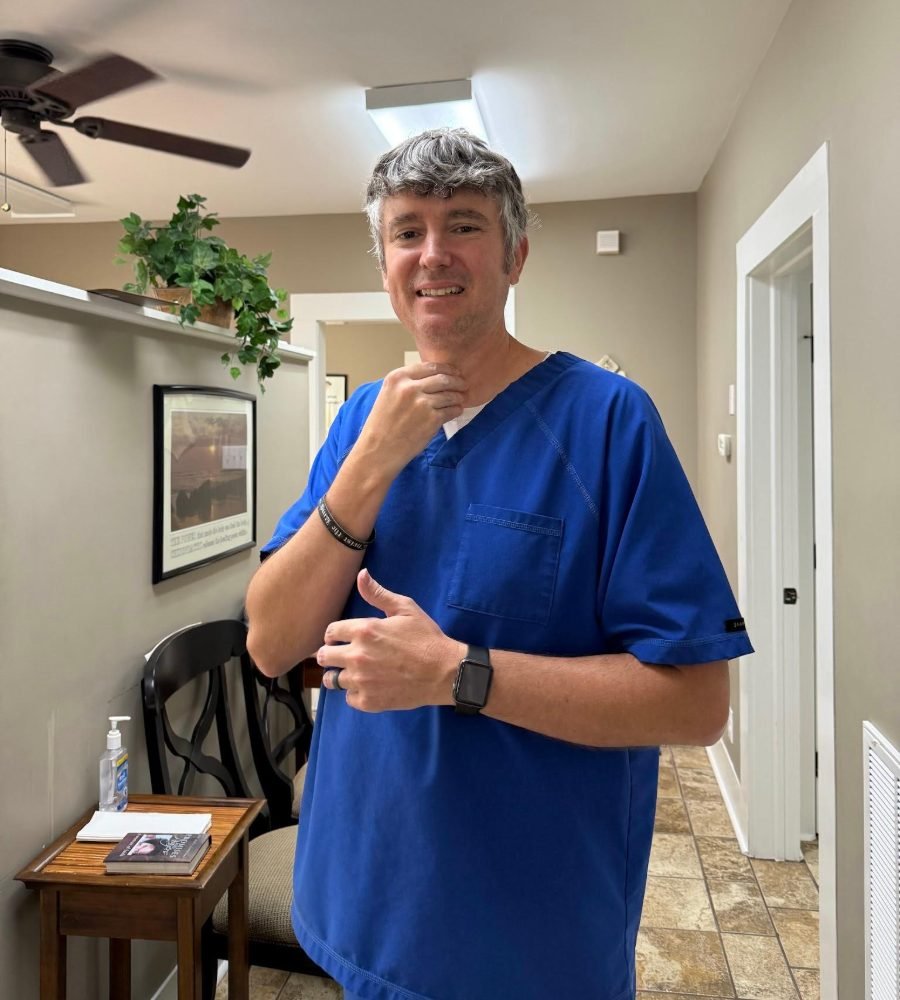
Burning out the gland with hormone replacement is a fifty year old model. To manage your health you have to look at what is causing the problem, not only the symptoms it produces.
Usually because the panel was incomplete. Most physicians order TSH and sometimes total T4. Those two markers can sit inside the reference range while hormone conversion, transport or autoimmune activity is still driving fatigue, weight gain and brain fog. A complete functional panel looks at eleven markers instead of two.
A complete functional thyroid evaluation includes TSH, total T4, free T4, the free thyroxine index, T3 uptake, free T3, reverse T3, thyroid binding globulin, TPO antibodies, TBG antibodies and TSH receptor antibodies. Together those eleven show production, conversion, transport and immune activity rather than just hormone level.
Hashimoto's is an autoimmune condition in which the immune system attacks the thyroid gland, and it is the most common cause of hypothyroidism. The distinction matters because the underlying problem is immune rather than glandular, which means replacing hormone alone does not address what is causing the damage.
No. Dr. King is a Doctor of Chiropractic, not a prescribing physician, and does not start, stop or adjust thyroid medication. This is a functional evaluation that works alongside your existing care and examines the factors your current panel may not be measuring.
Because most T4 to T3 conversion happens outside the thyroid gland. Roughly 60 percent occurs in the liver, about 20 percent depends on gut flora, and another 20 percent occurs in peripheral tissue. Poor liver function or disrupted gut flora produces poor conversion regardless of how the gland itself is performing, and regardless of how much hormone is replaced.
Dr. Channing King, DC evaluates functional thyroid markers at King Family Chiropractic, 402 Main St, Trussville, AL 35173, about fifteen miles northeast of downtown Birmingham. Patients travel in from Mountain Brook, Vestavia Hills, Homewood, Hoover, Leeds and Springville, and from well outside Birmingham, roughly a fifty mile radius. Call (205) 655-0010.
Slow thyroid function means slow tissue repair and more inflammation. Joints that never quite recover are a common thread.
See the six steps →Back pain, neck pain and headaches, evaluated for cause rather than managed as symptoms.
See conditions treated →The thyroid material on this site is his. He has been teaching it in Birmingham for years.
Meet Dr. King →Thyroid patients travel to Trussville from across greater Birmingham:
Call (205) 655-0010. Dr. King will tell you what your existing panel shows, what it does not, and what a complete evaluation would add.